Shingles and nerve pathways
Published reports described restless-leg symptoms alongside shingles affecting nerve regions. Interesting timing—but not evidence that chronic RLS is usually caused by an undetected virus.
In the ebook: references [4–5]Your iron tests may be fine. You barely drink, don't smoke and have one coffee a day. Yet some nights are manageable—and others are miserable. There may be more worth exploring than the familiar list of triggers.
Discover intriguing, lesser-known RLS research—carefully explained, not oversold—then use a colour-coded 28-day tracker to compare your own symptoms, routines, sleep and exceptions.

You've heard the checklist: check your iron, avoid caffeine, cut alcohol, stretch before bed. Some of that advice matters. But what happens when you already do those things and your RLS still swings between quiet and terrible nights?
Maybe the discomfort starts earlier than it used to. Maybe a bad night follows an ordinary day—or a good night follows something you thought was a trigger. It is easy to keep blaming the last food, drink or stressful event when there is no reliable record to compare.
You don't need another list of things to eliminate. You need a way to explore the research with a critical eye and examine what is actually happening in your own life.
Part Two of the ebook explores selected findings beyond the standard iron–caffeine–alcohol advice. Some are single case reports; others involve small or selected patient groups. The goal isn't to convince you that one of these findings explains your RLS. It's to help you understand what was observed and where uncertainty remains.
Published reports described restless-leg symptoms alongside shingles affecting nerve regions. Interesting timing—but not evidence that chronic RLS is usually caused by an undetected virus.
In the ebook: references [4–5]Studies in vein-care settings reported restless-leg symptom improvement for some selected patients following venous treatment. These findings do not establish a treatment for everyone with RLS.
In the ebook: references [10–12]Research has explored RLS alongside certain digestive conditions. Study design and small samples mean these findings deserve careful reading—not a sweeping claim that RLS begins in the gut.
In the ebook: references [13–15]One report raised a question about a stevia-extract-based sweetener. It cannot show that the ingredient caused symptoms or that sweeteners generally trigger RLS.
In the ebook: reference [16]
Reading research opens questions. The RLS Trigger Detective Excel tracker gives you a structured way to explore those questions in everyday life—without assuming that a coincidence proves a cause.
The tracker helps organise personal observations. It cannot determine a medical cause or validate a trigger. Unknown details can remain blank.
Whether your symptoms are occasional, increasingly disruptive or just bewilderingly inconsistent, the toolkit is for readers who want to understand the possibilities without jumping to conclusions.
You have followed standard advice, but your good and difficult nights still don't make sense. You want a broader, careful exploration.
You have tried different routines and remedies. Instead of one more untested fix, you want a consistent way to record what actually happens.
You want to compare symptoms, sleep and daily circumstances over time—including the important nights that don't support your first theory.
The ebook gives you questions worth exploring. The Excel workbook helps you see how those questions relate—or don't relate—to your actual days and nights.
A single bad evening can be misleading. Compare all 28 days, including the exceptions that make simple explanations less convincing.
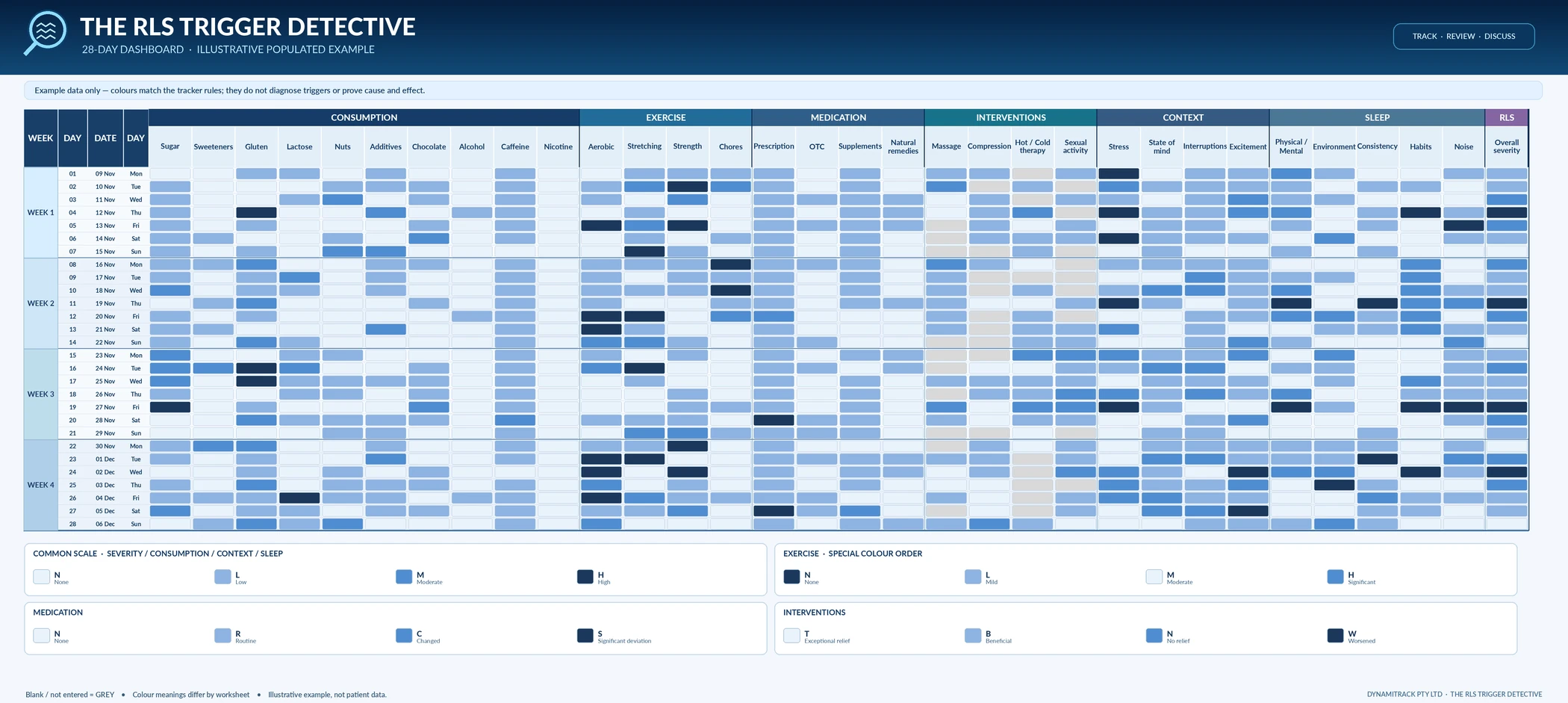
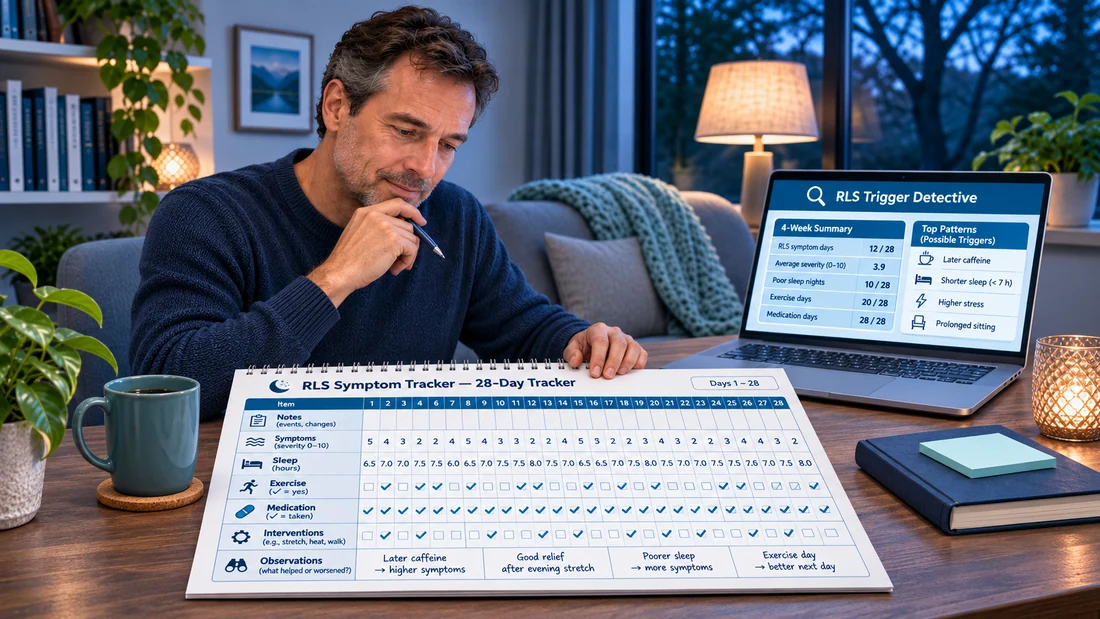
Use separate sections for RLS severity, sleep, consumption, exercise, medication, interventions and context.
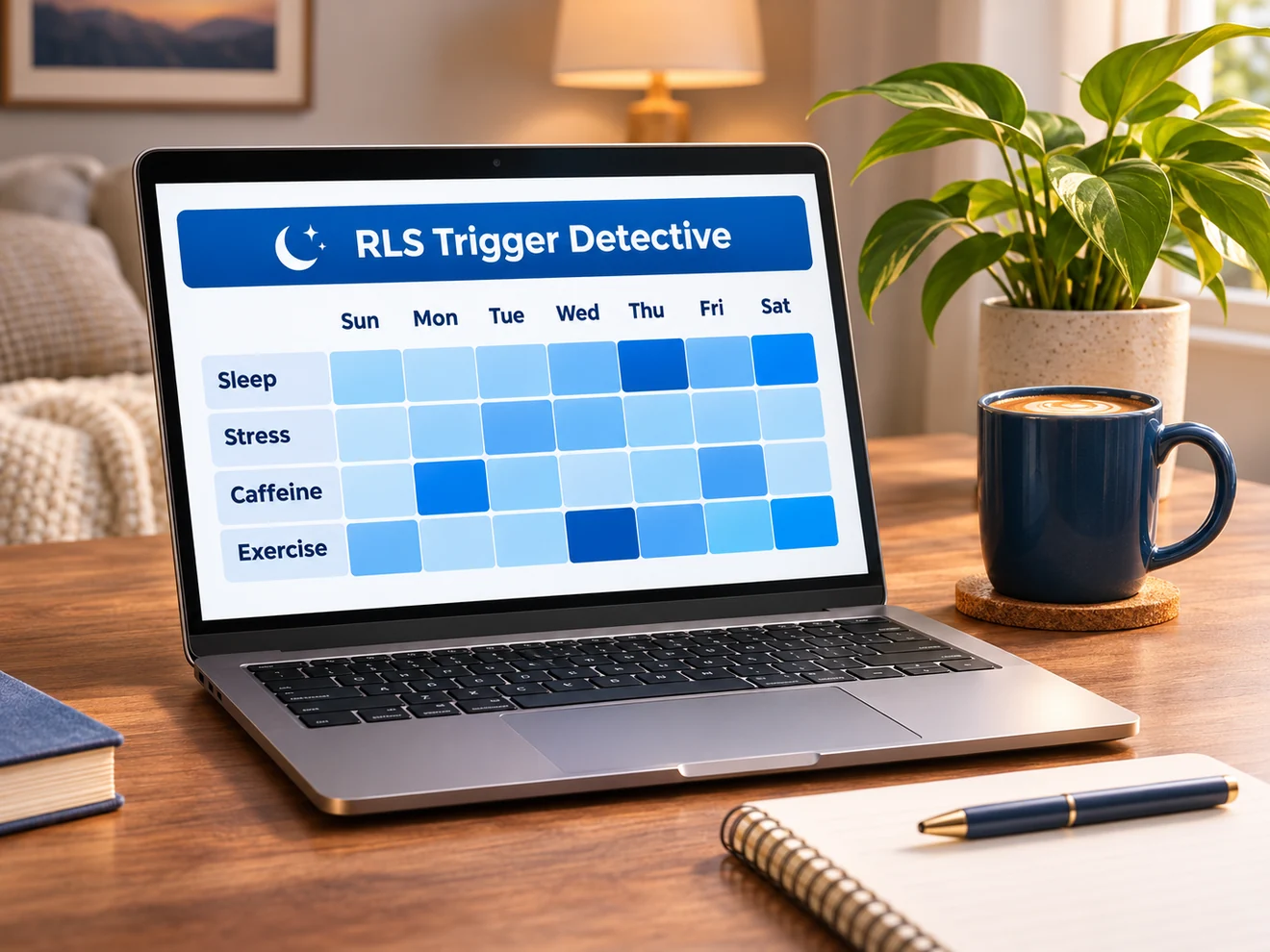
Quick entries feed a visual summary. You can look across days without having to reread long journal entries every time.
Record possible associations without treating colours or coincidences as proof of a cause or a reason to change treatment.

Your entries flow into a structured dashboard so you can compare easier and harder nights with what happened during the day. Blank is not the same as none. Six consistent colours help you scan without needing seven different legends.
Illustrative populated example, not real patient data. The dashboard highlights observations, not medically proven triggers.
A small daily habit, followed by a more thoughtful review—not a race to diagnose yourself.
Read the research in context and choose observations relevant to your circumstances, not every possible theory.
Use dropdown codes in the 28-day Excel tracker. Add a brief note when timing, medication or other details matter.
Review the coloured dashboard. Compare severe and mild nights, and notice when an apparent pattern fails.
Keep up to three useful observations and unanswered questions. If you wish, bring the printable worksheet to a healthcare professional.

The 28-day Excel dashboardOne complete digital kit for curious readers who want to explore RLS beyond the same standard explanations.
The sample worksheet is a preview of an optional companion, not the product's sole purpose or a diagnostic form.
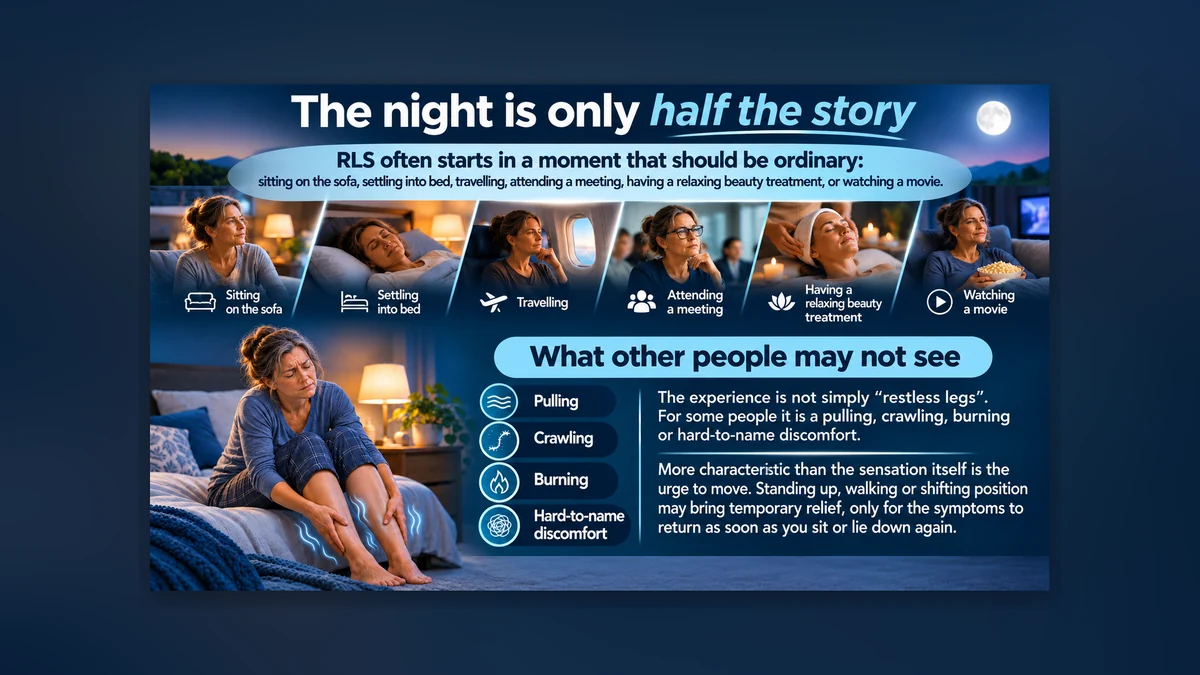
When you live with RLS, the same generic tips can become frustrating—especially when your symptoms vary even though your routines have barely changed. You may be doing the things people recommend and still wonder why Tuesday was easy and Wednesday was awful.
The RLS Trigger Detective was created from that curiosity. What else has research explored? Which claims are based on one patient, and which have stronger evidence? What could you observe in your own life without turning every coincidence into a diagnosis?
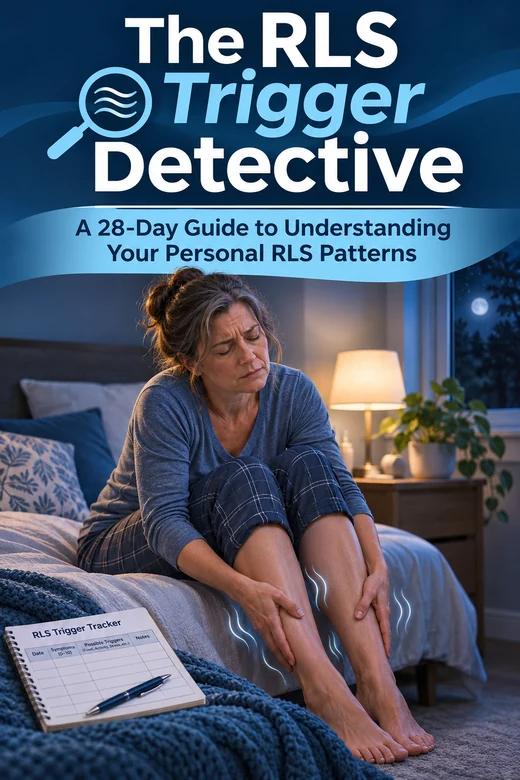
The answer is an approachable research guide paired with a 28-day tracker that makes space for the good nights, bad nights and exceptions. It aims to support understanding, not to promise a hidden cause or an overnight fix.
Created by Dynamitrac Pty Ltd with a lived-experience perspective. No endorsement by a medical organisation is claimed.

One price. No confusing tiers or add-ons. The ebook and tracker are designed to work together.
Checkout links for Whop, Gumroad and Etsy will be added when those product listings are live. This preview currently opens an email enquiry.
Digital files for personal use. Please read the digital purchase and support policy before purchasing. Taxes or fees, if applicable, are shown by the marketplace at checkout.
Because ebooks and spreadsheets cannot be physically returned once delivered, change-of-mind refunds are generally not offered after access or download, where permitted by law and the selling platform.
If your files are missing, damaged or cannot be opened, please email admin@dynamitrac.com, ideally within 7 days of purchase. We'll help you obtain working files or arrange an appropriate remedy or refund if the problem cannot be resolved.
The 7-day contact request is for prompt support, not a restriction on statutory rights. Applicable consumer law and the checkout platform's refund rules always take precedence. No promise is made that 28 days of tracking will identify a cause or improve symptoms. Read the full digital purchase policy ↗
The aim isn't a guaranteed answer after four weeks. It's a better way to investigate rather than react to each difficult night in isolation.
You can look back across your entries and compare symptoms, sleep and everyday circumstances, including good nights and the exceptions that challenge a first impression. You keep a record of what remains unexplained.
One especially difficult night may dominate your impression of the entire month. It can be harder to remember what varied, which nights were calmer and where an apparent link didn't repeat.
Exploring an uncertain condition should feel grounded, not overwhelming. These answers explain the limits and the value of the ebook and tracker.
Explore the $29 kit →The ebook does not simply repeat a short list of familiar suggestions. It explains selected less familiar research clues and helps you record circumstances that may be relevant to your own experience. It also avoids promising that a particular clue will explain your symptoms.
The book does not promise that 28 days will identify a cause. The tracker and dashboard are designed to help you create a more organised account of symptoms, sleep, circumstances, and exceptions. If the result is inconclusive, you still have dated notes and clearer questions to take to a healthcare professional.
The ebook explains what research findings can and cannot show. It cautions against turning one case or one difficult night into a conclusion, and separates observations that may be tracked from concerns that belong in a clinical conversation. The reader is not asked to diagnose a hidden condition.
The Excel tracker, colour-coded dashboard, and Daily Tracker Entry Checklist provide a consistent structure for recording the main categories. Unknown details can be left blank. The aim is a useful record, not a perfect one.
The book does not tell readers to start, stop, increase, reduce, or change the timing of prescribed medication or supplements. It advises readers not to delay medical assessment and frames medication or health concerns as topics to discuss with a healthcare professional. The Clinician Conversation Worksheet helps organise those questions.
Explore the research and investigate your own patterns. Questions about the $29 kit or your download? Contact Dynamitrac.